Advocacy & inclusion

The FSOG Story

From a Mumbai photojournalism campaign to a community and archive of queer history.

FSOG, Fifty Shades of Gay

Founded by Shubham Mehrotra in 2016, Fifty Shades of Gay began by asking queer and trans people what a fairer world would look like. Its work has since grown from street portraits into community support, historical research and The Living Archive.

2016

An encounter on the way home

When I returned to India after years in international journalism, Section 377 still criminalised consensual same-sex sexual acts. The 2014 NALSA judgment had affirmed transgender people’s constitutional rights, but everyday life revealed how far legal recognition was from acceptance.

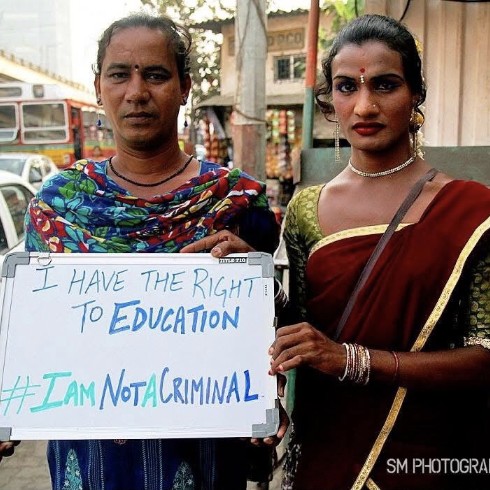
On the drive from Mumbai airport, I saw trans women offering blessings at traffic signals while drivers rolled up their windows. Among the women whose stories I would document were Meetu, who wanted to study and join the police, and Pooja, who relied on shop collections and festival dancing. They were approached for good fortune, yet denied education, employment and an ordinary place in society.
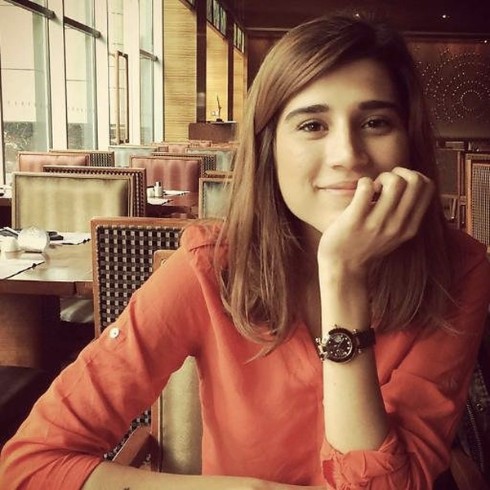
Shubham Mehrotra
Shubham Mehrotra, founder of Fifty Shades of Gay.
Pooja and Meetu holding #IAmNotACriminal whiteboards in Mumbai
Pooja (left) and Meetu (right) in Mumbai, demanding the right to education. Meetu dreamed of becoming a police officer; Pooja survived on daily street collections and dancing.

February 2016

#IamNotACriminal

I started Fifty Shades of Gay as a photojournalism campaign. With a camera, a whiteboard and a marker, I asked queer and trans people one question: in a fairer world, what right would you want?

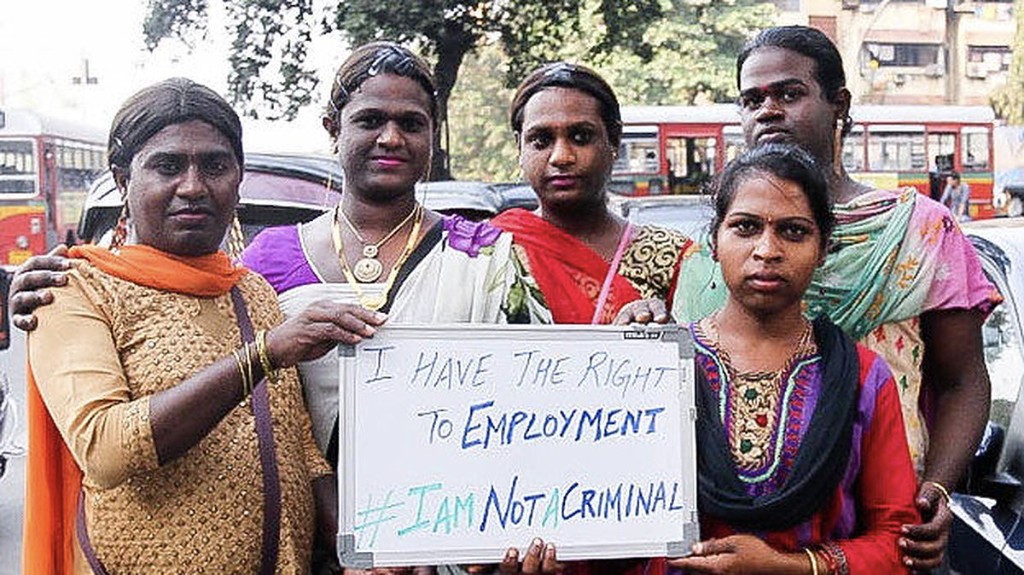
The responses became #IamNotACriminal. Trans women at Mumbai’s traffic signals took part, alongside Sushant Divgikar, also known as Rani Ko-HE-Nur, Dr Sylvester Rodgers and designer Rohit Verma.

Families joined too. At Mumbai Pride, Pradeep Divgikar walked beside his child, Sushant, carrying a message of unconditional love. The campaign documented both the rights people were denied and the support that helped them live more openly.

Trans women at a Mumbai traffic junction holding an #IAmNotACriminal whiteboard
Trans women at a Mumbai traffic junction during #IAmNotACriminal, 2016.
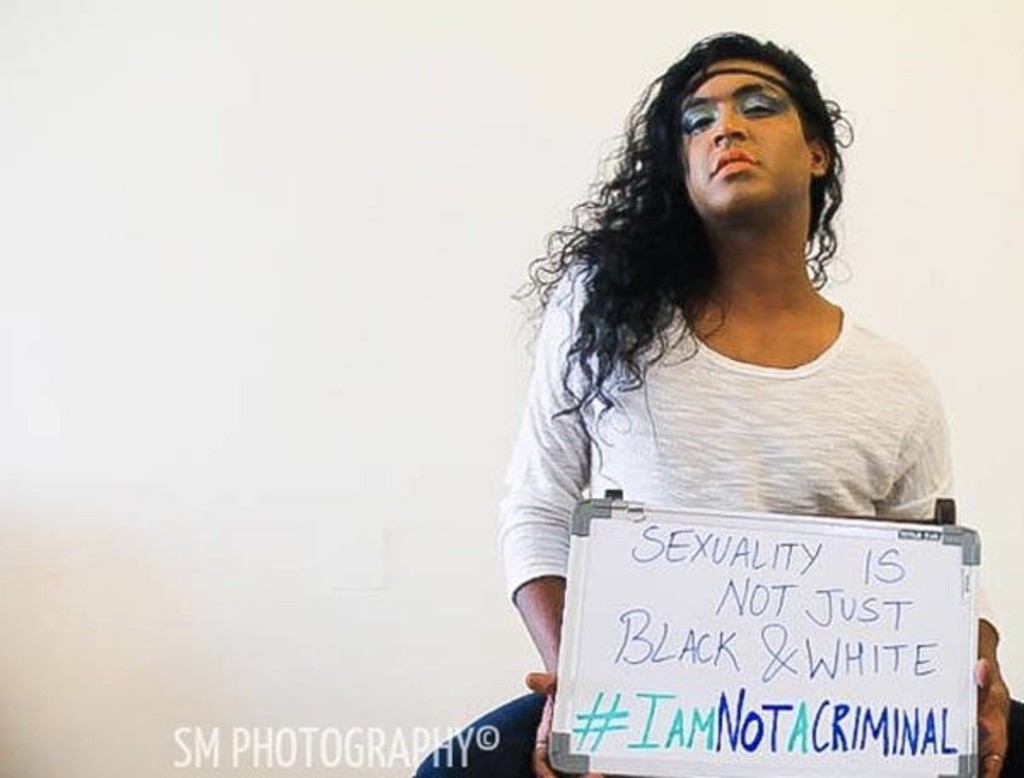
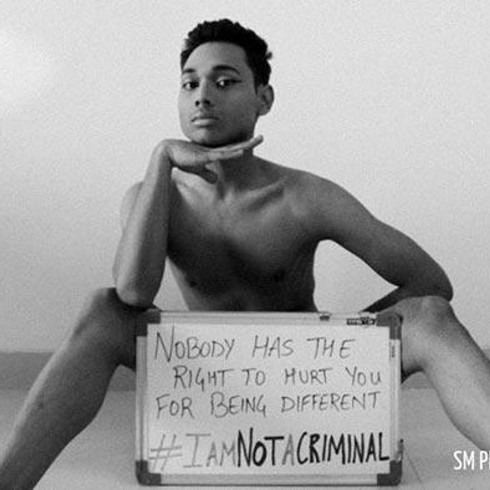
Fashion designer Jason holding a whiteboard that reads Sexuality is not just black and white
Fashion designer Jason during the 2016 campaign. Having found safety in his mother's acceptance at fifteen, he lent his face to FSOG to challenge the media's refusal to cover queer Indians living with dignity. SM Photography.

Mid-2016

Taking the stories beyond Mumbai

What began on Mumbai’s streets developed into a wider documentary project. With volunteer contributors, I gathered stories from Mumbai, Delhi, Pune, Chandigarh, Bengaluru, Chennai and Mysuru, alongside work in Odisha.

We documented more than 80 personal accounts, from cultural figures to trans women and hijra communities in Mumbai’s red-light districts. Each conversation depended on trust, particularly when being publicly identified could carry consequences.

As newspapers began covering the campaign, more people found us. Some were ready to share their experiences. Others were still closeted and looking for reassurance that they were not alone.

A 2016 national newspaper feature documenting how 23-year-old Shubham Mehrotra and volunteer contributors gathered over 60 personal narratives.

2017

Building a support network

As hundreds of people reached out, I realised that documenting their experiences was only part of the work. Many needed help with what they were facing.

We began connecting people in distress with mental health professionals and legal advisers. We also developed family counselling networks to help parents navigate questions of identity and acceptance.

Alongside this support, I advocated for comprehensive sex education. Again and again, our conversations revealed how misinformation and silence shaped people’s understanding of sexuality and gender.

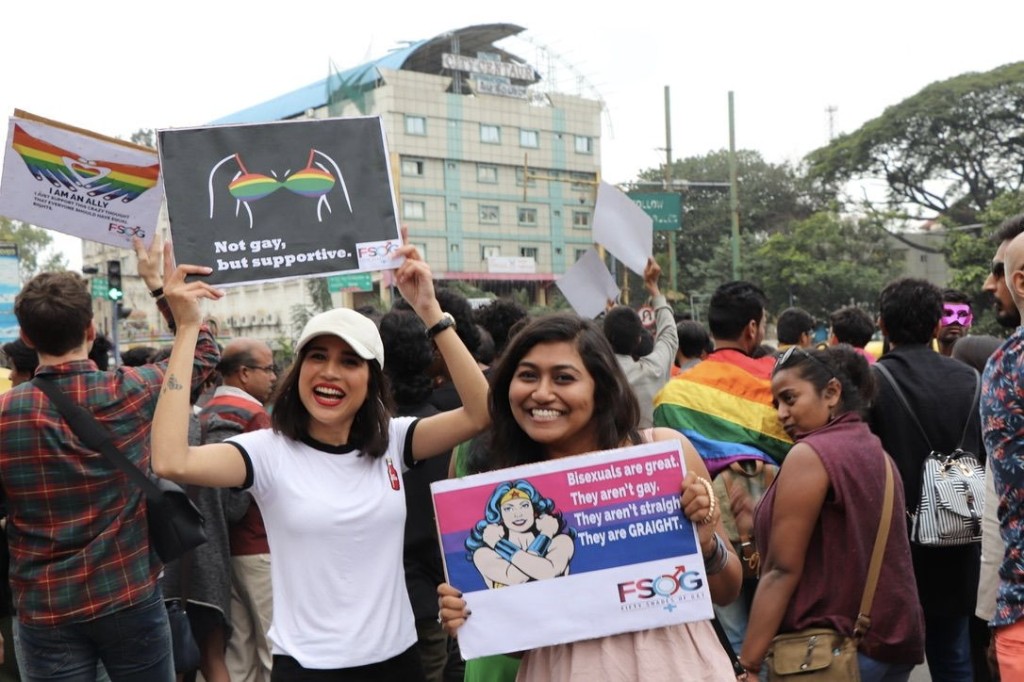
The FSOG crew marching with placards at Bengaluru Pride
The FSOG crew at Bengaluru Pride in 2017, with placards reading “Not gay, but supportive”, “I am an ally” and “Bisexuals are great”.

2017–2018

Taking the conversation into public life

Our work expanded to include vigils, crisis support, connections to legal counsel and the amplification of petitions challenging Section 377.

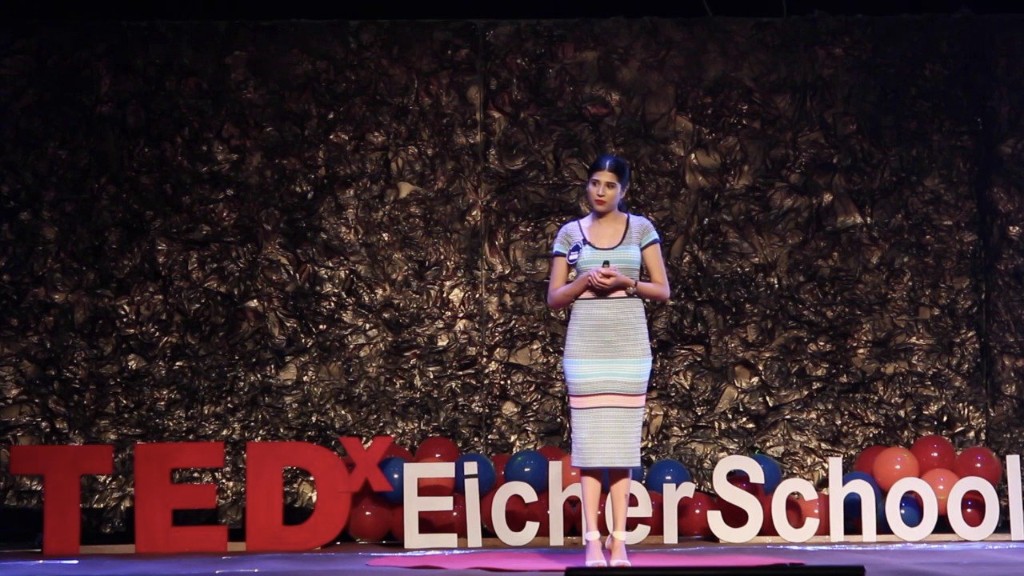
I also took the case for sex education to the TEDxEicherSchool stage. My talk examined the silence surrounding sexuality, consent and young people’s safety, drawing on questions that had become increasingly urgent through my work with FSOG.

The photographs remained important, but they were now part of a broader effort to help people be heard and find support.

Shubham Mehrotra on the TEDxEicherSchool stage
Shubham Mehrotra presenting her talk on breaking the culture of silence around sex education and youth safety at TEDxEicherSchool (available to stream on YouTube).

6 September 2018

A legal turning point

When the Supreme Court unanimously decriminalised consensual same-sex sexual acts between adults, the legal context in which we worked changed.

But the judgment could not, on its own, resolve family rejection, workplace discrimination or the absence of queer lives from the historical record.

For me, it reinforced the importance of continuing the work beyond the campaign against Section 377.

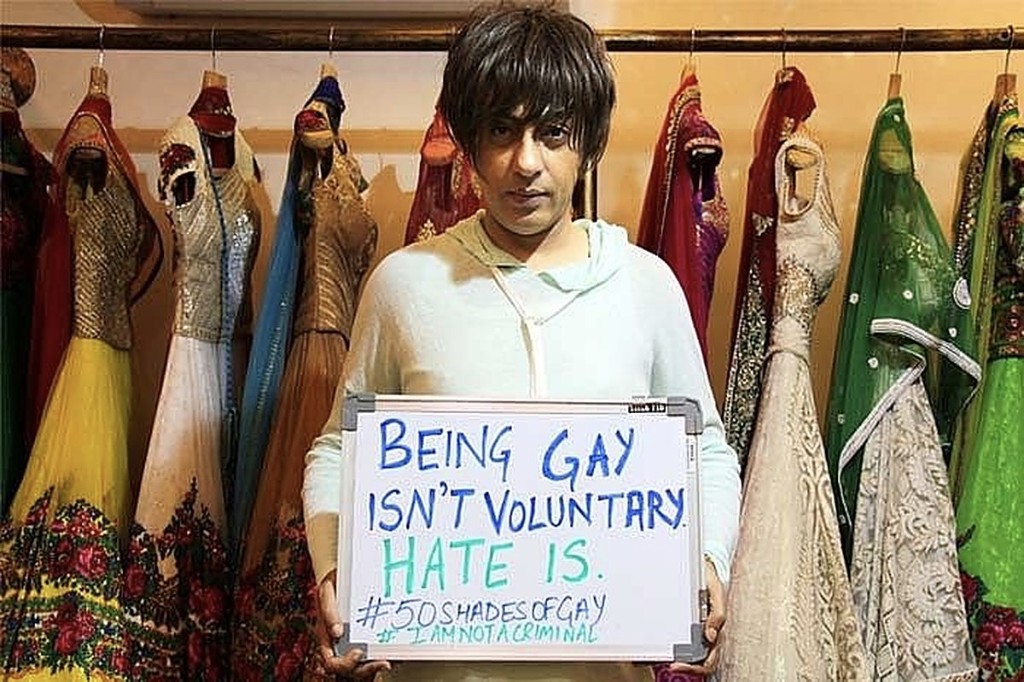
Fashion designer Rohit Verma holding a whiteboard that reads Being gay isn't voluntary, hate is
Fashion designer Rohit Verma, Mumbai.

After 2018

Recovering queer histories

I began widening FSOG’s focus to include queer histories across South Asia. Alongside documenting contemporary lives, we researched archival sources and cultural records that challenged the claim that queerness was a Western import.

Our conversations with artists and performers, including Anwesh Sahoo and Navin Noronha, explored how queer people were expressing themselves in the present. Our historical research asked whose lives had been overlooked, misrepresented or left out of the record.

We worked to recover those stories with their sources and context intact.

Anwesh Sahoo holding an #IAmNotACriminal whiteboard
Anwesh Sahoo, artist, model and Mr Gay World India 2016, who partnered with FSOG to challenge hyper-masculine stereotypes through fashion and visual art.
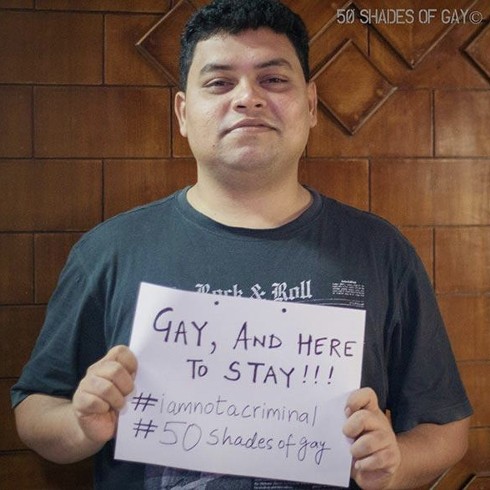
Navin Noronha holding a whiteboard that reads Gay, and here to stay
Stand-up comedian Navin Noronha, one of India's first out comics: "The fact that no one chooses to be gay is still not clear."

28 September 2026

Introducing The Living Archive

By this point, we had published more than 4,000 posts and grown into a community of 100,000 people reading, sharing and contributing to the work.

I introduced The Living Archive for readers who wanted to explore the research beyond a social media post. This free fortnightly publication brings together long-form investigations, archival documents, source lists and reading recommendations.

It gives us more space to explain what we have found, how we have verified it and what remains uncertain. It also gives readers the means to follow the sources and continue exploring for themselves.

The Living Archive by Fifty Shades of Gay

Connect with Shubham

Speaking and teaching invitations, advisory sessions, virtual coffees and Laudco projects.